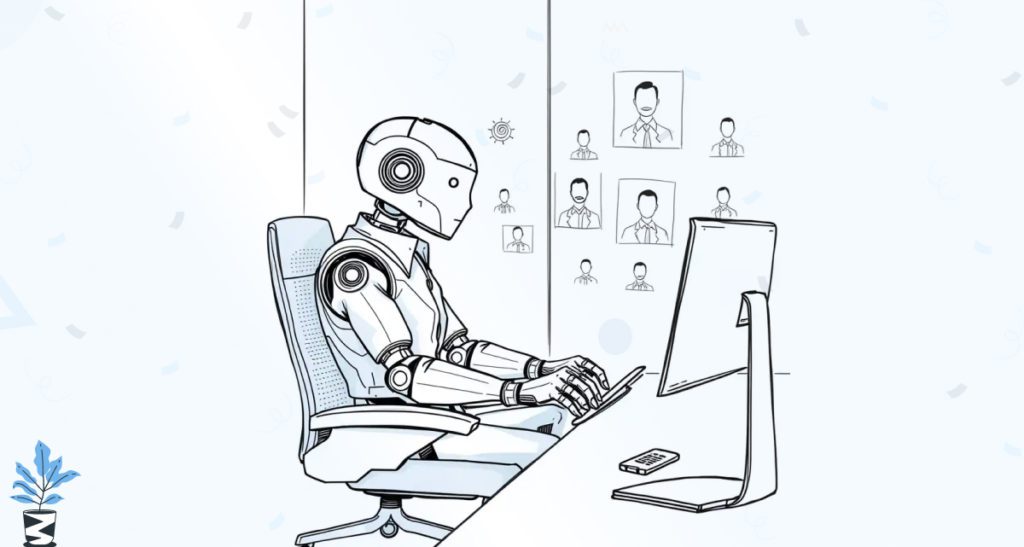
Hiring the right talent has never been more complex or more critical. In 2026, organizations are flooded with resumes, yet still struggle to predict who will actually perform, adapt, and stay. Traditional interviews and CV screening rely heavily on intuition, leaving room for bias and costly mis-hires. This is where AI psychometric assessment transforms recruitment. By combining behavioral science with artificial intelligence, these assessments deliver objective, data-backed insights into candidate potential. For CHROs and CEOs, AI psychometric assessment is no longer an experimental tool; it’s a strategic advantage for smarter, fairer, and future-ready hiring.
TL;DR
- AI psychometric assessment uses data and behavioral science to predict job success
- It measures cognitive ability, personality traits, and work behaviors objectively
- AI reduces hiring bias while improving quality-of-hire and retention
- Data-driven insights outperform resumes and unstructured interviews
- Modern HR teams integrate psychometrics directly into their hiring workflows

Looking for the Best HR Software Solutions ? Check out the Best HR Software Solutions.
What Is an AI Psychometric Assessment?
An AI psychometric assessment is a technology-driven evaluation method that measures a candidate’s cognitive abilities, personality traits, behavioral tendencies, and job-relevant competencies using artificial intelligence. Unlike traditional psychometric tests, which rely on static scoring models, AI-powered assessments continuously learn from hiring outcomes and performance data.
At a foundational level, these assessments are rooted in behavioral psychology and industrial-organizational science. Candidates respond to structured questions, scenarios, or simulations. AI algorithms then analyze patterns such as decision-making speed, consistency, and response behavior to generate predictive insights about job fit and performance.
What makes AI psychometric assessment particularly powerful is its ability to contextualize results. Instead of generic personality labels, AI maps traits to role-specific success indicators. For example, problem-solving agility may be weighted more heavily for tech roles, while emotional intelligence and collaboration may matter more in leadership or customer-facing positions.
For HR leaders, this shifts hiring from subjective judgment to evidence-based decision-making. It also creates a standardized evaluation framework that scales across roles, departments, and geographies something traditional interviews cannot achieve.
Pro Tip: The real value of AI psychometric assessments lies not in testing candidates but in predicting performance before hiring.
Why Traditional Hiring Methods Fall Short
Despite advances in recruitment technology, many organizations still depend on resumes and interviews as primary decision tools. These methods, while familiar, are deeply flawed.
Resumes reflect opportunity, not capability. They often exaggerate achievements and fail to capture cognitive ability, adaptability, or behavioral alignment. Interviews, on the other hand, are highly subjective. Research consistently shows that unstructured interviews are poor predictors of job performance and are heavily influenced by unconscious bias.
Moreover, traditional hiring struggles with consistency. Different interviewers assess candidates differently, making it difficult to compare talent objectively. As organizations scale, this inconsistency compounds leading to mis-hires, higher attrition, and inflated hiring costs.
AI psychometric assessment addresses these gaps by introducing standardization and objectivity. Every candidate is evaluated against the same scientific benchmarks. Decisions are supported by data, not intuition. Over time, as AI models learn from employee performance and retention outcomes, hiring accuracy improves even further.
How AI Psychometric Assessments Work
Understanding how AI psychometric assessments function helps leaders trust and adopt them effectively.
1. Scientific Test Design
Assessments are built on validated psychological models measuring traits such as cognitive ability, personality dimensions, motivation, and behavioral preferences. These are aligned to specific job roles and competencies.
2. AI-Driven Data Analysis
Instead of simple scoring, AI analyzes response patterns, consistency, and correlations across thousands of data points. Machine learning models identify which traits predict success for specific roles within an organization.
3. Predictive Talent Insights
Results are translated into actionable insights, job fit scores, role alignment indicators, and risk flags. Hiring managers receive clear, decision-ready outputs rather than raw test data.
4. Continuous Learning
As hired candidates perform on the job, AI models recalibrate. This feedback loop ensures assessments become more accurate and context-specific over time.
Pro Tip: Choose assessment platforms that can be customized to your organization’s success metrics, not just generic benchmarks.

Key Benefits of AI Psychometric Assessment in Hiring
1. Bias Reduction and Fair Hiring
One of the most significant advantages of AI psychometric assessment is bias reduction. By focusing on behavioral data rather than background or demographics, these tools promote equitable hiring. When designed responsibly, AI assessments reduce the influence of unconscious bias related to gender, age, or education pedigree.
2. Improved Quality of Hire
Organizations using psychometric data consistently report higher quality-of-hire. Candidates selected based on cognitive and behavioral fit adapt faster, perform better, and require less managerial intervention.
3. Lower Attrition and Hiring Costs
Poor hiring decisions are expensive. AI psychometric assessments help predict cultural and role alignment, reducing early attrition. Lower turnover directly translates into reduced recruitment and onboarding costs.
4. Scalable and Consistent Decision-Making
Whether hiring 10 candidates or 10,000, AI-driven assessments ensure consistency. This scalability is critical for fast-growing organizations and global hiring programs.
AI Psychometric Assessment vs Traditional Evaluation
| Aspect | Traditional Hiring | AI Psychometric Assessment |
| Objectivity | Low (interviewer bias) | High (data-driven) |
| Predictive Accuracy | Limited | High |
| Scalability | Poor | Excellent |
| Bias Control | Minimal | Strong |
| Insight Depth | Surface-level | Behavioral & cognitive |
Real-World Use Cases Across Roles
AI psychometric assessments are not limited to entry-level hiring. Leadership teams increasingly use them for managerial and executive roles. For sales positions, assessments predict persuasion style and resilience. For technology roles, they measure logical reasoning and learning agility. For leadership roles, emotional intelligence, decision-making under pressure, and ethical judgment are key indicators.
Global organizations also leverage psychometric data for internal mobility matching existing employees to future roles based on capability rather than tenure.
Why HR Teams Should Use AI Psychometric Assessment with Qandle
Modern HR teams need assessment tools that integrate seamlessly into their hiring workflows. Qandle enables organizations to embed AI psychometric assessment directly into recruitment processes without disrupting candidate experience.
Through Qandle’s hiring ecosystem, HR leaders can evaluate candidates objectively, compare insights across roles, and generate structured reports for hiring managers. These insights align hiring decisions with performance, engagement, and long-term retention goals. Importantly, assessments integrate with broader HR data allowing organizations to connect hiring insights with performance outcomes over time.
This closed-loop approach transforms assessments from a one-time filter into a continuous talent intelligence system.
Conclusion
Hiring in 2026 demands more than resumes and interviews. AI psychometric assessment empowers organizations to make smarter, fairer, and more predictive hiring decisions through data-driven talent insights. By measuring what truly matters cognitive ability, behavior, and role fit these assessments reduce bias, improve performance, and strengthen workforce quality.
For organizations serious about building future-ready teams, AI psychometric assessment is not a trend, it’s a necessity. The question is no longer if you should adopt it, but how soon. Ready to upgrade your hiring strategy?
Book a personalized demo today and discover how data-driven assessments can transform your talent decisions.
AI Psychometric Assessment FAQs
Yes, when built on validated psychological models and continuously improved with performance data.
They significantly reduce bias by focusing on objective behavioral and cognitive data instead of background factors.
Absolutely. They are designed for high-volume, consistent candidate evaluation.
When well-designed and transparent, candidates often perceive them as fairer than subjective interviews.
Software You Need For All Your AI Psychometric Assessment Process