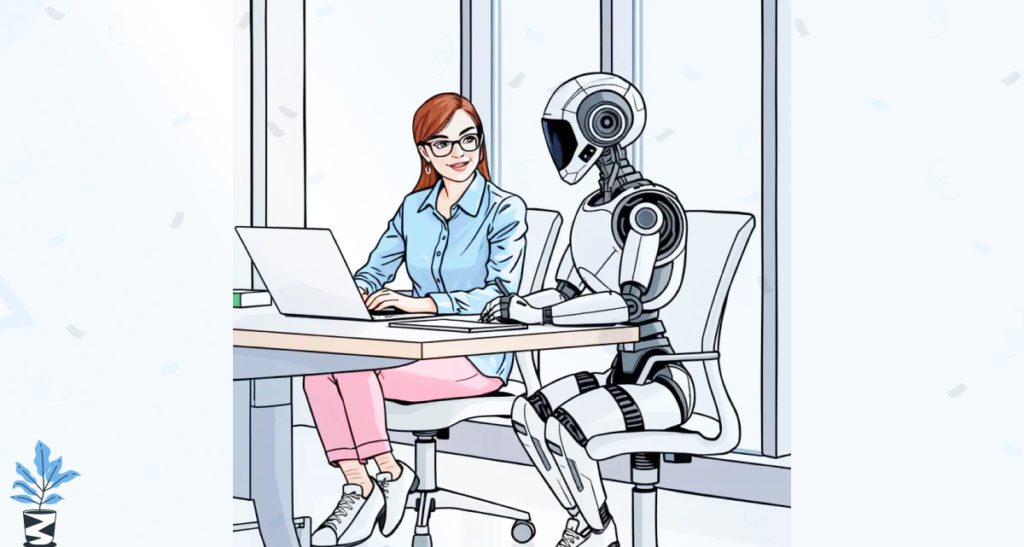
Artificial Intelligence (AI) is transforming nearly every business function, and Human Resources is no exception. From screening resumes and automating payroll to predicting employee turnover and personalizing learning experiences, AI is helping HR teams work smarter and faster. However, this evolution raises an important question: Can AI make Human Resources more human? Rather than replacing HR professionals, AI has the potential to eliminate repetitive administrative tasks, allowing HR teams to focus on what truly matters: building meaningful employee relationships, developing talent, and creating exceptional workplace experiences. In this guide, we’ll explore how AI in HR is reshaping modern workplaces, its benefits, challenges, and best practices for successful implementation.
TL;DR
- AI in HR automates repetitive tasks, improves decision-making, and enhances employee experiences.
- AI supports recruitment, onboarding, payroll, performance management, learning, and workforce analytics.
- Rather than replacing HR professionals, AI enables them to focus on strategic and people-centric initiatives.
- Ethical AI implementation requires transparency, data privacy, and human oversight.
- Organizations that combine AI with human empathy create more efficient and employee-focused workplaces.

Looking for the Best HRMS Software ? Check out the Best HRMS Software.
What Is AI in HR?
AI in HR refers to the use of Artificial Intelligence technologies to automate, optimize, and enhance various human resource functions. These technologies include machine learning, natural language processing (NLP), predictive analytics, and intelligent automation, enabling HR teams to make faster and more informed decisions.
Instead of replacing human interaction, AI handles repetitive administrative work such as resume screening, interview scheduling, attendance tracking, and payroll processing. This allows HR professionals to dedicate more time to employee engagement, leadership development, organizational culture, and strategic workforce planning.
AI in HR is the use of Artificial Intelligence to automate HR processes, improve decision-making, enhance employee experiences, and enable HR professionals to focus on strategic people management.
Can Artificial Intelligence Make Human Resources More Human?
The short answer is yes but only when implemented thoughtfully.
AI cannot replace empathy, emotional intelligence, or the human connections that define successful workplaces. What it can do is reduce administrative burdens, allowing HR professionals to spend more time coaching employees, resolving workplace challenges, supporting career development, and strengthening organizational culture.
Rather than replacing the “human” element of HR, AI amplifies it by freeing HR teams from repetitive tasks and enabling them to focus on meaningful employee interactions.
How AI Is Transforming Human Resources
Smarter Recruitment and Talent Acquisition
Recruitment is one of the most time-consuming HR functions. AI streamlines hiring by automating resume screening, matching candidates with job requirements, scheduling interviews, and answering candidate queries through chatbots.
By reducing manual effort, recruiters can spend more time building relationships with candidates, conducting meaningful interviews, and improving the overall hiring experience.
Personalized Employee Onboarding
AI can personalize onboarding journeys by recommending relevant training modules, automating document collection, answering common employee questions, and guiding new hires through onboarding checklists.
This creates a smoother onboarding experience while allowing HR teams to provide greater personal support during an employee’s first days.
Intelligent Learning and Development
Instead of assigning identical training programmes to every employee, AI analyzes skills, performance, career aspirations, and learning behaviour to recommend personalized development paths.
This helps employees acquire relevant skills while supporting internal mobility and future leadership development.
Continuous Performance Management
Traditional annual appraisals are increasingly being replaced by continuous feedback models.
AI helps managers identify performance trends, recommend coaching opportunities, track progress toward goals, and highlight potential skill gaps before they become larger issues.
Importantly, performance decisions should always involve human judgment rather than relying solely on automated recommendations.
Predictive Workforce Analytics
AI analyzes workforce data to identify patterns that may not be immediately visible.
Organizations can use predictive analytics to forecast:
- Employee turnover risks
- Hiring needs
- Workforce capacity
- Skills shortages
- Employee engagement trends
- Future leadership requirements
These insights support more proactive workforce planning and better business decisions.
Pro Tip: Use AI to support HR decisions, not replace them. Human judgment remains essential when evaluating employee performance, promotions, and workplace concerns.
Benefits of AI in HR
Improves HR Efficiency
AI automates repetitive administrative tasks such as attendance tracking, leave approvals, interview scheduling, document management, and payroll processing.
This reduces administrative workload while improving operational efficiency across HR functions.
Enhances Employee Experience
Employees benefit from faster HR responses, self-service support, personalized learning recommendations, and quicker access to workplace information.
A more responsive HR function contributes to greater employee satisfaction and engagement.
Supports Better Decision-Making
AI provides HR leaders with real-time insights into workforce trends, performance metrics, hiring effectiveness, and employee engagement.
Data-driven decisions reduce guesswork and improve organizational planning.
Strengthens Talent Management
AI helps organizations identify high-potential employees, recommend development opportunities, and support succession planning.
This creates stronger talent pipelines and prepares future leaders more effectively.
Reduces Administrative Errors
Automated workflows improve data accuracy while minimizing manual errors in payroll, attendance, leave management, and employee record maintenance.
Employees benefit from greater consistency and transparency across HR processes.
Challenges of Implementing AI in HR
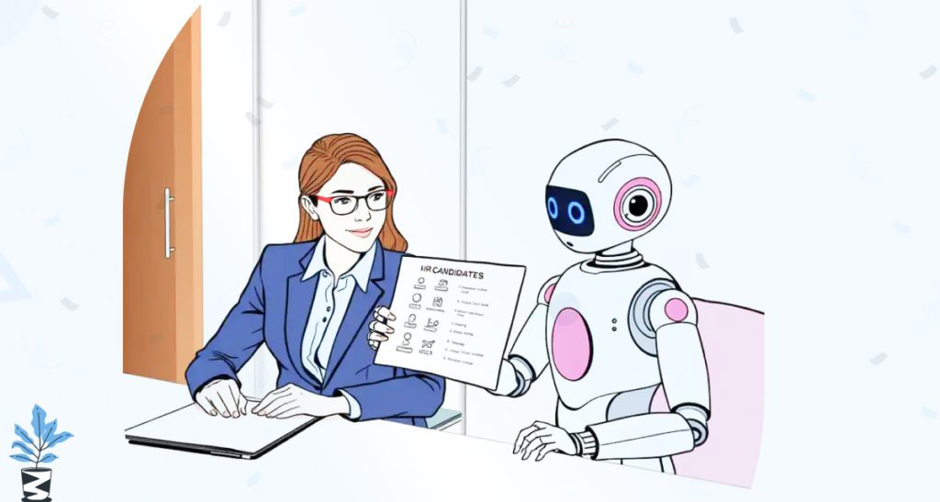
Data Privacy and Security
HR systems manage highly sensitive employee information. Organizations must ensure AI platforms comply with data protection regulations and maintain robust security controls.
Employees should understand how their information is collected, processed, and protected.
Algorithmic Bias
AI systems are only as unbiased as the data used to train them. If historical HR data reflects existing biases, AI recommendations may unintentionally reinforce unfair outcomes.
Organizations should regularly review AI models, monitor results, and maintain human oversight to promote fairness.
Resistance to Change
Employees and managers may hesitate to adopt AI due to concerns about job displacement or unfamiliar technology.
Clear communication, training, and transparency help build confidence in AI-enabled HR processes.
Over-Reliance on Automation
AI can support decision-making, but it should not replace empathy, context, or human relationships.
Critical HR decisions involving hiring, promotions, employee relations, and performance management should always include human involvement.
Pro Tip: Establish clear governance policies for AI in HR, including regular audits, ethical guidelines, and human review for high-impact decisions.
Best Practices for Using AI in HR
Automate Repetitive Tasks
Use AI for administrative processes such as scheduling interviews, managing leave requests, answering routine HR queries, and generating reports.
This allows HR professionals to focus on strategic initiatives and employee support.
Maintain Human Oversight
AI should assist, not replace HR professionals.
Major employment decisions should always be reviewed by qualified managers or HR leaders to ensure fairness, context, and accountability.
Be Transparent
Communicate openly about how AI is used within HR processes.
Employees should understand when AI is involved, what data it uses, and how decisions are supported.
Continuously Monitor AI Performance
Regularly evaluate AI systems for accuracy, fairness, effectiveness, and compliance.
Continuous monitoring ensures AI remains aligned with organizational values and evolving business needs.
Common Mistakes to Avoid
| Mistake | Best Practice |
| Automating every HR process | Balance automation with meaningful human interaction |
| Ignoring AI bias | Regularly audit AI models and hiring outcomes |
| Poor data quality | Maintain clean, accurate, and secure HR data |
| Lack of employee communication | Explain how AI supports not replaces employees |
| Relying solely on AI recommendations | Combine AI insights with human judgment and experience |
Why HR Teams Should Use Qandle AI-Powered HR Solutions
AI delivers the greatest value when it complements human expertise rather than replacing it. Qandle combines intelligent automation with comprehensive HR management through features such as AI-assisted Recruitment, Performance Management, Employee Engagement Surveys, Learning Management, Payroll, Attendance & Leave Management, Employee Self-Service (ESS), and HR Analytics. By automating routine administrative tasks, providing actionable workforce insights, and streamlining employee lifecycle processes, Qandle enables HR professionals to spend more time developing people, strengthening workplace culture, and driving strategic business outcomes.
Conclusion
The future of HR isn’t about choosing between people and technology, it’s about combining the strengths of both. AI in HR enables organizations to automate repetitive work, improve workforce insights, personalize employee experiences, and make more informed decisions. At the same time, empathy, trust, communication, and ethical leadership remain uniquely human qualities that no technology can replace.
Organizations that use AI responsibly while maintaining a people-first approach are better positioned to build engaged, productive, and resilient workforces. With solutions like Qandle, businesses can embrace AI-powered HR without losing the human connection that defines exceptional employee experiences.
Book a personalized demo with Qandle today to discover how AI-powered HR can help your organization become more efficient, more strategic, and ultimately, more human.
AI in HR FAQs
No. AI is designed to automate repetitive administrative tasks and provide insights, while HR professionals continue to play a vital role in leadership, employee relations, coaching, and strategic decision-making.
AI improves efficiency, enhances employee experience, supports data-driven decisions, streamlines recruitment, personalizes learning, and reduces administrative errors.
Common challenges include data privacy concerns, algorithmic bias, employee resistance to change, and the risk of over-relying on automation without human oversight.
Organizations should maintain transparency, protect employee data, regularly audit AI systems for fairness, and ensure that important employment decisions always include human review.
AI provides faster HR support, personalized learning recommendations, streamlined onboarding, self-service capabilities, and quicker access to information, allowing HR teams to focus on more meaningful employee interactions.
Software You Need For All Your AI in HR Process